Cutting bamboo to restore nature: Hangzhou team tackles 'green desert' crisis
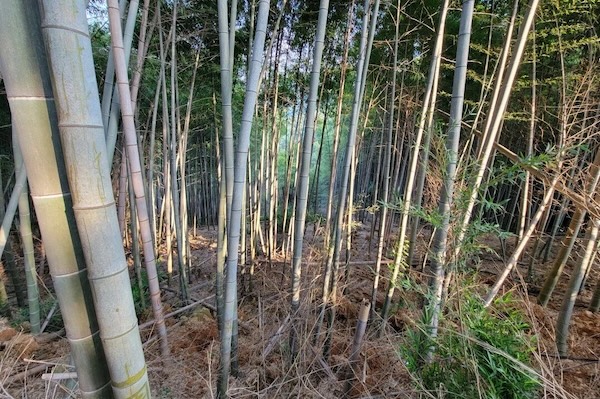
The fast-growing bamboo crowds out other species on Siwuling Mountain. [Photo/Tide News]
On China's Tree Planting Day, while tree-planting campaigns took place nationwide, a young team in Xiaoshan district's Siwuling Mountain was doing the opposite — cutting bamboo to revive biodiversity.
The group, with an average age of 28 and graduates from institutions including University of Chicago and Zhejiang University, is addressing an ecological issue known as a "green desert", where fast-growing bamboo crowds out other species, leaving forest floors barren.
Their solution — returning bamboo to forest — involves selectively clearing bamboo and reintroducing native broadleaf trees. Through controlled experiments and long-term monitoring using infrared cameras and acoustic devices, the team has recorded over 700 species of plants and animals, including protected birds returning to the area.
Initially met with skepticism, the project has gained local support by delivering economic benefits. It has created over 130 jobs, increased village income, and attracted around 300,000 visitors annually through eco-tourism and community-run initiatives such as tea production and cafés.
Blending scientific restoration with community participation, the project offers a model for sustainable rural development — one that redefines conservation as both an ecological and social endeavor.
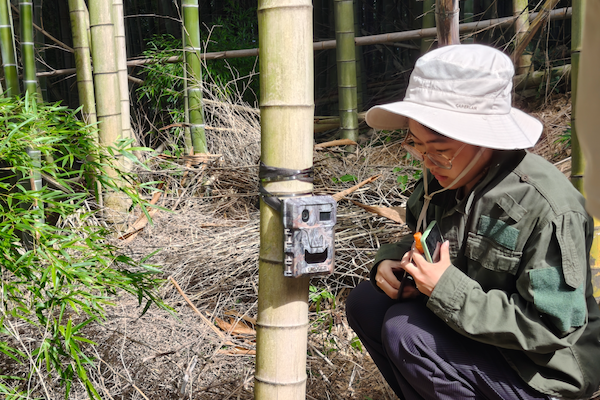
A group member installs an infrared camera. [Photo/Tide News]