How Hangzhou is powering BRICS cooperation
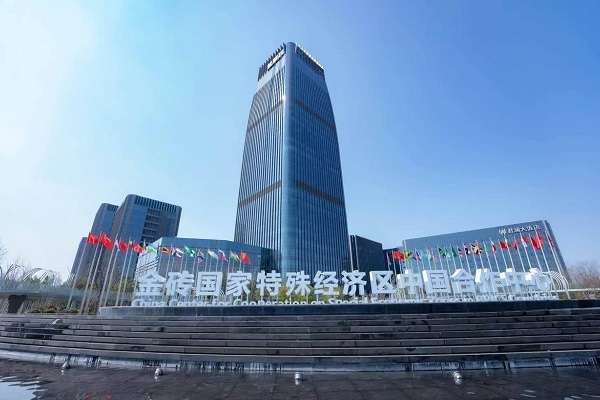
The China Center for Cooperation on Special Economic Zones in BRICS Countries in Qiantang district, Hangzhou. [Photo/Tide News]
As BRICS returns to the global spotlight, Hangzhou is accelerating efforts to strengthen the China Center for Cooperation on Special Economic Zones in BRICS Countries, hoping to make it a new driver for high-level opening-up.
Following renewed international calls for closer engagement with BRICS — voiced most recently at the World Economic Forum in Davos — Hangzhou's government has made upgrading the BRICS center a key priority. The move aligns with the city's broader push to build itself into a hub linking domestic and international economic circulation.
Established in March last year in Hangzhou's Qiantang district, the BRICS center is the first cooperation platform in the BRICS economic and trade field announced by China's top leadership. It focuses on five core functions: two-way investment, trade promotion, technology cooperation, institutional innovation, and outbound business services.
In early 2026, Qiantang district officials carried out high-level consultations in Beijing with central ministries, seeking policy support and stronger coordination to enhance the center's role and attract BRICS-related institutions. The district has set a clear target for the year: bringing in at least five representative international or BRICS-affiliated organizations and maintaining double-digit growth in imports and exports.
Early results show promise. In 2025, Qiantang's exports to BRICS members rose by more than 20 percent, while exports to BRICS partner and Belt and Road countries jumped over 40 percent. From January to November, Hangzhou's trade with BRICS countries reached 217.5 billion yuan ($312.6 billion), accounting for nearly 30 percent of the city's total foreign trade.
Backed by strong manufacturing capacity, integrated national-level open platforms, and a growing network of professional service providers, Hangzhou aims to turn the BRICS center into a gateway linking Chinese enterprises with emerging markets, while contributing to global South cooperation.